





Complete Guide to Flea and Tick Prevention for Dogs
You may never see the flea or tick that puts your dog at risk.
A quick walk through the park, time in the backyard, or contact with another animal can expose your dog to parasites. By the time you notice scratching, licking, irritated skin, or an attached tick, the problem may already have started.
Fleas and ticks are not simply an annoyance. They can cause discomfort, contribute to skin problems, and transmit diseases. Some parasites can also enter your home with your dog and create problems for other pets and people.
The good news is that prevention can become a simple part of your dog's regular care routine.
Why Flea and Tick Prevention Matters
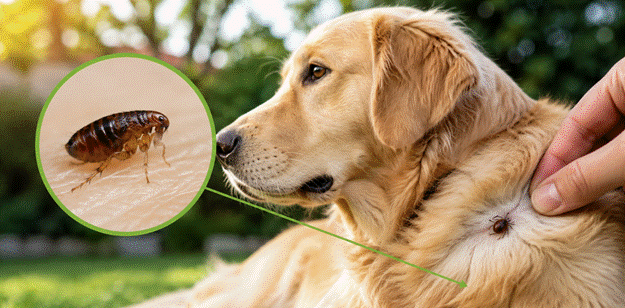
Fleas can cause persistent itching and skin irritation. Some dogs are particularly sensitive to flea bites and can develop flea allergy dermatitis, resulting in significant discomfort even when only a small number of fleas are present.
Fleas can also reproduce quickly. Finding a few fleas on your dog does not necessarily mean there are only a few fleas in your home. Eggs and immature stages can develop in the surrounding environment, allowing an infestation to continue even after adult fleas are no longer easy to spot.
Ticks present a different concern. They attach to animals and can transmit organisms responsible for various tick borne diseases. Dogs can also carry ticks into the home, potentially exposing other animals and people. The CDC recommends checking pets for ticks every day, particularly after outdoor activity.
That is why prevention is generally more effective than waiting until you see a parasite.
Can Dogs Get Fleas and Ticks All Year?
Yes.
It is easy to think of fleas and ticks as a seasonal problem, but parasite activity does not follow a simple calendar.
Fleas can survive throughout the year when they have access to an animal and suitable conditions. The CDC recommends year round flea control for pets and advises pet owners to follow the instructions for the selected product.
Ticks can also remain active throughout the year depending on the species and location. The Companion Animal Parasite Council recommends year round tick control for dogs because tick activity and distribution vary and some species can remain active outside traditional warm weather periods.
For pet owners, the practical takeaway is simple: do not assume your dog is automatically safe because the weather has changed.
Where Do Dogs Pick Up Fleas and Ticks?

Dogs can encounter parasites in many everyday situations.
Your dog may pick up fleas or ticks while walking through grass, exploring vegetation, visiting a park, spending time in the backyard, hiking, or interacting with other animals.
Even dogs that spend most of their time indoors are not completely protected from fleas. Parasites can enter homes through animals and other routes, while dogs can also encounter them during short outdoor trips.
Lifestyle matters. A dog that regularly hikes or spends time outdoors may have different exposure than a dog that primarily stays indoors. Your local parasite risks matter too.
This is one reason it is useful to discuss your dog's lifestyle with your veterinarian when deciding on an appropriate parasite prevention routine.
How to Check Your Dog for Fleas and Ticks
Regular checks should be part of your dog's routine, particularly after spending time outdoors.
When checking for ticks, pay close attention to areas where ticks may be harder to notice:
- Around and inside the ears
- Around the eyes and eyelids
- Under the collar
- Under the front legs
- Between the toes
- Between the back legs
- Around the tail
Ticks can be especially difficult to find on dogs with long or dark coats. The CDC recommends checking pets daily and removing ticks promptly if you find one.
For fleas, watch for excessive scratching, licking, biting at the skin, redness, or small dark particles in your dog's coat. A flea comb can also help you inspect the coat more closely.
Regular checks do not replace preventive treatment. They simply give you another opportunity to identify a problem early.
How to Choose Flea and Tick Protection for Your Dog
Flea and tick prevention comes in different forms, including oral chews, topical treatments, collars, and broader parasite protection products.
The right choice depends on several factors, including your dog's age, weight, lifestyle, health history, location, and exposure to parasites.
Always check the product label before administering a treatment. Weight ranges are important, and products should be used according to their labelled directions.
It is also important not to assume that one product is appropriate for every dog. If your dog has a medical condition, takes other medication, is pregnant or nursing, or you have concerns about a particular treatment, speak with your veterinarian.
Convenient Monthly Options for Dog Owners
For many owners, a monthly chew can make parasite prevention easier to remember because it can become part of a regular care schedule.
Global Vet Pro offers a range of genuine flea, tick, worming, and broader parasite protection products for dogs.
For owners looking for an all in one option, Global Vet Pro offers Simparica TRIO Chews for Medium Dogs 22 to 44 lbs and Simparica TRIO Chews for Large Dogs 44 to 88 lbs. Global Vet Pro describes Simparica TRIO as a monthly chew providing protection against fleas, ticks, heartworm disease, and certain intestinal worms.
Global Vet Pro also offers NexGard Spectra Chews for Dogs Medium 16.6 to 33 lbs. The Global Vet Pro range includes NexGard Spectra as an all in one chew covering fleas, ticks, heartworm, and certain intestinal worms.
The important consideration is not simply choosing a product. It is choosing a product that is appropriate for your dog's weight and circumstances and then using it consistently according to the product instructions.
hat Should You Do If You Find a Tick?
If you find an attached tick, remove it as soon as possible.
Use fine tipped tweezers or an appropriate tick removal tool. With tweezers, grasp the tick as close to your dog's skin as possible and pull upward with steady pressure. After removing it, clean the bite area and wash your hands.
The CDC recommends prompt tick removal and monitoring pets for changes in behaviour or appetite following a suspected tick bite. If your dog becomes unwell or you are concerned about possible tick borne disease, contact your veterinarian.
What If Your Dog Already Has Fleas?
Finding fleas means it is time to act rather than wait for the problem to disappear.
Because fleas have multiple life stages, treating only the adult fleas you can see may not be enough to resolve an established infestation. Flea eggs and immature stages can be present in areas where your dog spends time.
The CDC recommends treating pets for fleas year round and following the instructions for the chosen flea control product. Regular cleaning of your home and frequent vacuuming of areas where your dog rests can also help manage environmental flea stages.
If an infestation has become established, your veterinarian or a qualified pest control professional can help determine what additional steps are appropriate.
Common Flea and Tick Prevention Mistakes
Even a good prevention plan can fail when it is not followed consistently.
One common mistake is waiting until a parasite is visible before starting prevention. Another is forgetting scheduled doses or using a product outside its labelled weight range.
Some owners also focus only on their dog and overlook the environment. Fleas can develop in bedding, carpets, furniture, and other areas where pets spend time.
Another mistake is assuming that indoor dogs do not need protection. Fleas can survive indoors, and even dogs that spend most of their time inside can encounter parasites.
Finally, avoid using products without first checking whether they are intended for your dog's species, age, and weight. When in doubt, ask your veterinarian.
Build a Prevention Routine You Can Maintain
The most useful prevention plan is one that becomes part of your normal routine.
Keep track of your dog's treatment schedule. Set a calendar reminder if necessary. Check your dog regularly, particularly after outdoor activities, and keep bedding and resting areas clean.
Your dog's lifestyle should also be considered. Frequent hiking, outdoor activity, travel, interaction with other animals, and local parasite risks can all influence exposure.
The Companion Animal Parasite Council recommends year round broad spectrum parasite control for dogs, with protection against important parasites including fleas and ticks.
Regular veterinary checkups are another important part of prevention. Your veterinarian can help assess your dog's individual risks and recommend an appropriate parasite control program.
Protect Your Dog Before You See the Problem
Flea and tick prevention is not about waiting until your dog starts scratching.
It is about making parasite control part of responsible everyday pet care.
Regular checks, appropriate preventive products, good household hygiene, and a consistent treatment schedule can all play a role in reducing parasite exposure.
Global Vet Pro offers a range of genuine flea, tick, worming, and all in one parasite protection products for dogs, including convenient monthly chew options. The goal is to make it easier for pet owners to find appropriate parasite protection and maintain a consistent routine.
Before starting or changing any parasite treatment, read the product information carefully and speak with your veterinarian if you have questions about whether a product is appropriate for your dog.
A few minutes spent on prevention can help save your dog from unnecessary discomfort and help keep your home healthier for everyone.
FAQs
How often should I check my dog for ticks?
The CDC recommends checking pets daily for ticks, particularly after they spend time outdoors. Pay close attention to the ears, eyelids, collar area, legs, toes, and around the tail.
Can indoor dogs get fleas?
Yes. Fleas can survive indoors and can reach pets even when they spend most of their time inside. Indoor living reduces some exposure but does not eliminate the risk.
Does my dog need flea and tick prevention all year?
Parasite activity varies by location and species, but veterinary parasite guidance supports consistent year round prevention for dogs. Your veterinarian can help determine the appropriate prevention routine based on your dog's individual risk.
What should I do if I find a tick on my dog?
Remove the tick promptly using fine tipped tweezers or a suitable tick removal tool. Clean the area afterward and monitor your dog for changes in behaviour or appetite. Contact your veterinarian if you have concerns or your dog becomes unwell.
What is all in one parasite protection for dogs?
All in one parasite protection refers to products designed to provide protection against multiple parasites in a single treatment. Depending on the product, this can include fleas, ticks, heartworm, and certain intestinal worms. Always check the specific product label for the parasites covered.
How do I choose the right flea and tick treatment for my dog?
Consider your dog's age, weight, lifestyle, health, location, and parasite exposure. Always use a product according to its labelled directions and choose the appropriate weight range. If you are unsure, speak with your veterinarian.
Can fleas survive in my home?
Yes. Fleas can develop through different stages of their life cycle in the environment. If your dog has fleas, treating the pet and addressing the home environment can both be important when managing an infestation.
Where can I find flea and tick protection for my dog?
Global Vet Pro offers a range of dog flea and tick products, including oral chews and all in one parasite protection options. The store carries products in different formulations and weight ranges to help pet owners find an option appropriate for their dog's needs.