





Flea, Tick & Worm Protection When Traveling with Your Dog
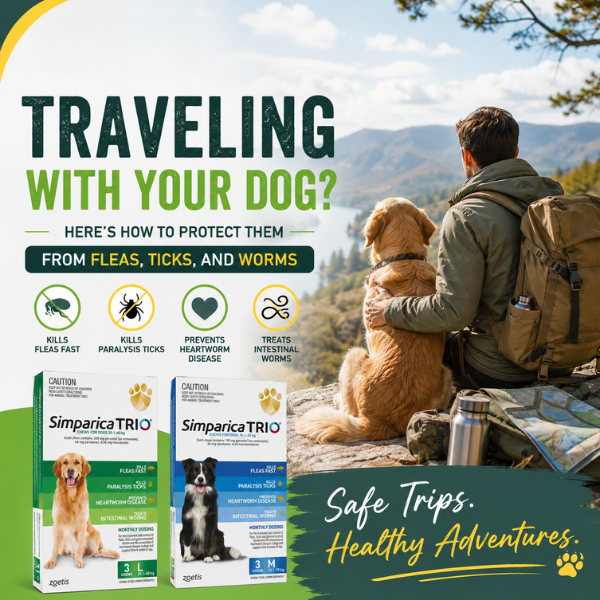
A road trip with your dog should end with great memories, not an unexpected visit to the veterinarian.
Many pet owners spend weeks planning the perfect vacation by booking pet-friendly accommodations, packing food and toys, and mapping out scenic stops. Yet one important part of travel preparation is often overlooked: protecting your dog from parasites.
Whether you're hiking through national parks, camping in the woods, relaxing at the beach, or simply visiting family, your dog is likely to encounter environments where fleas, ticks, mosquitoes, and intestinal worms thrive.
The good news is that protecting your dog doesn't have to be complicated. With the right preparation and a reliable preventive routine, you can focus on enjoying your trip instead of worrying about what your pet may bring home.
Why Traveling Puts Dogs at Greater Risk
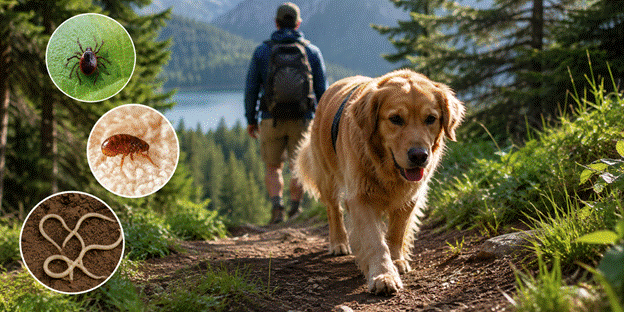
Travel exposes dogs to unfamiliar environments where parasites are more common than many owners realize.
Ticks hide in tall grass, wooded trails, and even suburban parks. Fleas spread easily anywhere pets gather, including hotels, campgrounds, dog parks, and rest stops. Mosquitoes, the carriers of heartworm disease, are especially active near lakes, rivers, and humid regions. Dogs can also pick up intestinal parasites from contaminated soil, water, or contact with infected animals.
Even if your dog spends most of its time indoors at home, travel significantly increases the chance of exposure because every new destination introduces new environmental risks.
The Hidden Health Risks Every Dog Owner Should Know
Parasites are more than just an inconvenience.
Fleas can cause severe itching, skin irritation, allergic reactions, and in some cases anemia, particularly in puppies and smaller dogs.
Ticks are known to transmit serious diseases such as Lyme disease, ehrlichiosis, and anaplasmosis. In many cases, dogs may not show symptoms until days or even weeks after a tick bite, making prevention far more effective than treatment.
Heartworm disease is one of the most dangerous yet preventable illnesses affecting dogs. Spread through mosquito bites, heartworms can damage the heart, lungs, and blood vessels. Treatment is expensive, physically demanding, and carries risks, while monthly prevention is simple and highly effective.
Intestinal worms such as roundworms and hookworms may lead to weight loss, digestive problems, poor nutrient absorption, and reduced overall health. Some parasites can also pose health risks to people, particularly young children.
Common Travel Destinations Where Parasites Thrive

Not every vacation destination carries the same level of risk, but parasites can be found almost anywhere.
Some of the most common exposure areas include:
- Hiking trails and forests: Ideal habitats for ticks waiting in tall grass and shrubs.
- Campgrounds: Wildlife frequently carry fleas and ticks, increasing the likelihood of exposure.
- Dog parks: High numbers of visiting dogs create opportunities for fleas and intestinal parasites to spread.
- Pet-friendly hotels: While most maintain excellent cleanliness standards, visiting pets can occasionally introduce fleas.
- Beaches and lakes: Warm temperatures and nearby standing water create favorable conditions for mosquitoes that transmit heartworm disease.
The safest assumption is that any destination where dogs spend time outdoors may present parasite risks.
How to Prepare Your Dog Before Traveling
The best protection starts before you leave home.
Begin by checking that your dog's parasite prevention is up to date. If you're traveling during warmer months or visiting wooded or coastal areas, this step becomes even more important.
Before your trip, make sure you:
- Confirm your dog is receiving monthly parasite protection.
- Pack enough preventive medication for the entire trip.
- Bring a tick removal tool in your pet first-aid kit.
- Keep your dog's vaccination records easily accessible.
- Carry fresh drinking water to discourage drinking from puddles or ponds.
Choosing a preventive that protects against multiple parasites can simplify your travel routine and reduce the risk of forgetting separate medications.
For larger dogs weighing between 44 and 88 pounds, Simparica Trio Chews for Large Dogs offer convenient monthly protection against fleas, ticks, heartworms, roundworms, and hookworms in a single chew. An all-in-one preventive can make preparing for travel much easier while helping protect your dog throughout the journey.
Smart Habits While You're Traveling
Even with preventive medication, a few simple habits can provide an extra layer of protection.
After every hike, walk, or outdoor adventure, inspect your dog's ears, neck, under the collar, between the toes, and around the tail. These are common places where ticks attach.
Brush your dog's coat regularly, especially after spending time in wooded or grassy areas. If your dog enjoys swimming, rinse and dry the coat afterward to help remove debris and make it easier to spot parasites during your inspection.
Whenever possible, keep your dog on marked trails instead of allowing them to explore dense vegetation where ticks commonly wait for passing animals.
Avoid allowing your dog to drink from standing water, as it may contain harmful bacteria or parasite eggs.
What to Do If You Find a Tick
Finding a tick doesn't necessarily mean your dog will become sick, but removing it correctly is important.
Use fine-tipped tweezers or a tick removal tool to grasp the tick as close to your dog's skin as possible. Pull upward slowly with steady pressure without twisting the tick.
After removal, clean the area with an antiseptic and monitor your dog over the next several days. If you notice fever, loss of appetite, unusual tiredness, swollen joints, or changes in behavior, contact your veterinarian promptly.
Don't Stop Prevention After the Trip
Many owners relax once they return home, but parasite prevention should continue year-round.
Fleas can survive inside homes, and mosquitoes remain active in many parts of the United States beyond the summer months. Continuing your monthly preventive helps protect your dog long after the vacation ends.
When you return home:
- Wash your dog's bedding and travel blankets.
- Vacuum your vehicle if your dog traveled inside.
- Perform one final full-body tick inspection.
- Continue your regular parasite prevention schedule without skipping doses.
Consistency is one of the most effective ways to reduce your dog's risk of parasite-related illnesses.
Frequently Asked Questions
Can my dog get fleas while staying at a hotel?
Yes. Although pet-friendly hotels maintain high cleaning standards, fleas can occasionally be introduced by visiting animals. Preventive medication significantly reduces your dog's risk.
Does my indoor dog need parasite prevention during travel?
Absolutely. Traveling exposes indoor dogs to environments they rarely encounter at home, increasing the likelihood of contact with fleas, ticks, mosquitoes, and intestinal parasites.
Are ticks only found in forests?
No. Ticks are commonly found in parks, backyards, walking trails, fields, and even landscaped areas with shrubs or tall grass.
Should I use parasite prevention all year?
Yes. Many parasites remain active throughout the year depending on your location and climate. Year-round prevention offers the most consistent protection.
Final Thoughts
Traveling with your dog is one of life's greatest pleasures, whether you're exploring new hiking trails, taking a cross-country road trip, or spending a relaxing weekend by the lake. But every adventure also brings new parasite risks that are easy to overlook.
By planning ahead, checking your dog regularly, and using reliable parasite prevention before you travel, you can dramatically reduce the chances of fleas, ticks, heartworms, and intestinal worms interrupting your trip.
A little preparation today can help ensure that the only thing your dog brings home is unforgettable memories.